




















A comedy by Jean-Pierre Martinez
English translation by Anne-Christine Gasc
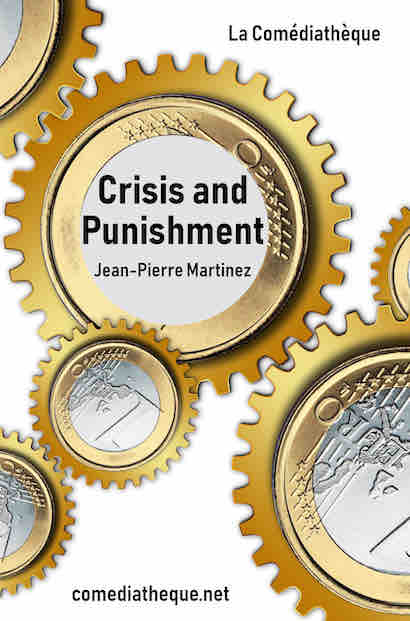
An actor ‘in between jobs’ finds work with a bank on the verge of bankruptcy, only to discover he is to be an actual scapegoat. But the nightmare is only beginning…
This comedy is primarily intended to denounce the excesses of the capitalist system, particularly in its financial dimension, as it crushes the majority of individuals to serve the interests of a few. This social critique takes on a comedic dimension here, also blurring the boundaries: does this story unfold in the « reality » of this theatrical fiction, or is it merely the projection of the main character’s nightmare, asleep at his desk on stage? To quote Calderón: « Life is a dream. » And for some, unfortunately, it can even be a nightmare.
This text is available to read for free. However, an authorization is required from the author prior to any public performance, whether by professional or amateur companies. To get in touch with Jean-Pierre Martinez and ask an authorization to represent one of his works CONTACT FORM
| DOWNLOAD PDF FOR FREE |
BUY THE BOOK |
|
|
|

The text of this play is also available in French and in Spanish.
The songs from the play. Lyrics and music Jean-Pierre Martinez. These songs may be used as part of a stage production, simple request to the author and without any additional fees. The audio file is available upon request, subject to prior authorization from the author for the use of the play’s text.
A Scapegoat… in the Banking World
Jérôme, an actor who has been unemployed for several years, finally thinks he has found a steady job in a bank. He soon discovers, however, that he was hired neither for his financial skills nor in spite of his lack of qualifications, but precisely because his profile makes him the ideal scapegoat. The bank, threatened with collapse after ruining some of its clients, needs someone on whom they can vent their anger. Jérôme will therefore be paid to take the blame for mistakes he did not make and to receive, in place of those truly responsible, insults, slaps and possibly even gunfire.
The theatrical mechanism pushes this principle of substitution to the point of absurdity. Each new client turns the office into an arena where Jérôme must play the role of the guilty party, while management remains safely out of reach. But after being treated like a “punching bag” for long enough, he gradually begins to inhabit the part: when one client comes, on the contrary, to thank him for having increased her wealth, he is the one who attacks her. The unemployed actor, chosen for his passivity, thus paradoxically finds his place by becoming increasingly convincing in the role imposed on him.
Beneath the farce and the burlesque violence, Crisis and Punishment constructs a satire of the scapegoat mechanism. Those at the top are “responsible for everything” but must never be guilty of anything; someone at the bottom of the hierarchy therefore has to shoulder the symbolic blame for the failures of the system. The religious metaphor then becomes literal: Jérôme is likened to Christ, named “employee of the month” in the guise of a crucified man, before the bank’s total collapse calls for an even more spectacular sacrifice. The nightmare-like ending does not really restore reality: on the contrary, it suggests that in the world of work, as in finance, absurdity has become the norm.