




















A comedy by Jean-Pierre Martinez
English translation by the author
Up to 24 actors (males or females)
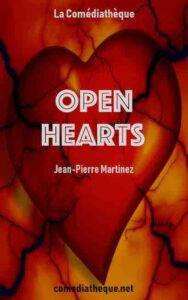
In a café across the street from a hospital, a decidedly odd landlord serves and observes the fate of his customers looking for hearts to steal… for a transplant or even a relationship.
This text is available to read for free. However, an authorisation is required from the author prior to any public performance, whether by professional or amateur companies. To get in touch with Jean-Pierre Martinez and ask an authorisation to represent one of his works CONTACT FORM
| DOWNLOAD PDF FOR FREE |
|
|
Self-Giving and Organ Donation: The Heart Has Its Reasons…
In the bar opposite the hospital, the owner watches doctors, patients, couples and families come and go, all of them facing matters of the heart, both literally and figuratively. The twelve scenes can be performed separately, but together they form a genuine ensemble comedy. Characters reappear, stories echo one another, and a transplant gradually connects several destinies, culminating in the final return of the woman introduced in the opening scene.
The structure rests on the two meanings of the word “heart”. Each episode begins with a familiar expression — a heart up for grabs, a heavy heart, giving one’s heart — before shifting from the emotional register to anatomical reality. This play on language is more than a decorative device: it generates the situations, triggers misunderstandings and allows the play to move naturally from romantic comedy to black humour, from intimate drama to social satire.
Beneath its lightness, the play explores the dilemmas surrounding organ donation: can we decide what happens to the body of someone close to us, how do we choose between two patients, and what becomes of generosity when self-interest, jealousy or corruption enter the equation? Medicine has no more control over destiny than love does. In both cases, everyone must contend with chance, guilt and the sense of indebtedness created by another person’s sacrifice. Yet these serious questions never turn into a didactic argument: they emerge through the contradictions and all-too-human weaknesses of the characters.
At once witness, confidant and commentator, the bar owner provides the thread that holds the whole piece together. His bar becomes an observation post where people come to drink, wait, confide and sometimes be given a new lease of life. The single setting, flexible casting and self-contained scenes offer considerable freedom in performance, while the echoes between the different episodes give the collection a particularly accomplished structure. The final scene closes the circle with the possibility of a second chance: with a new heart, perhaps it is possible not to repeat the same story, but to invent a different one.